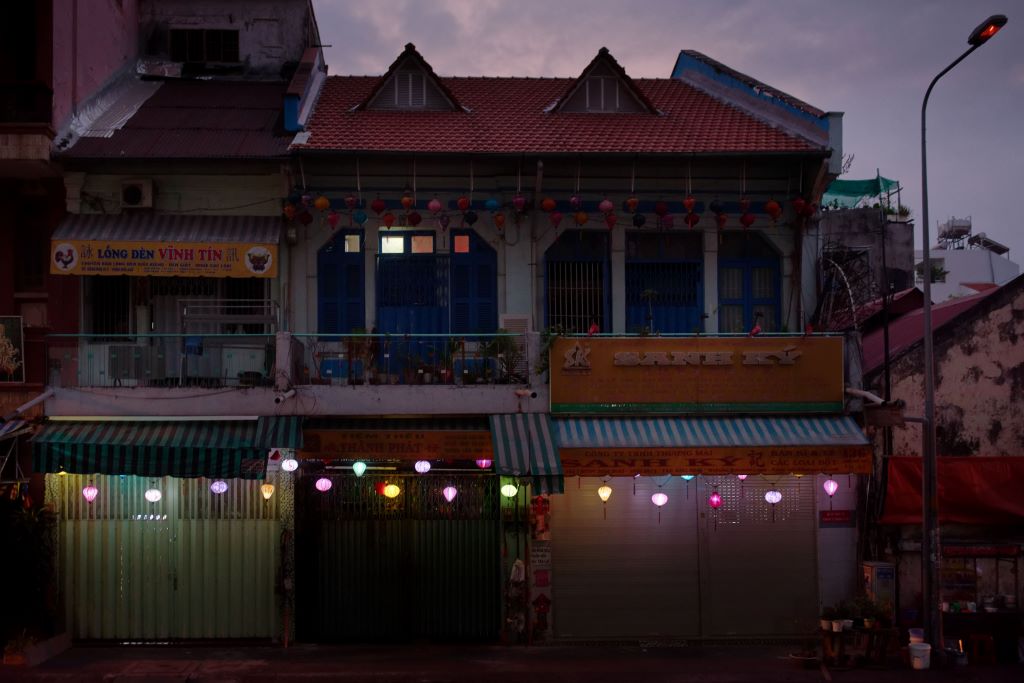
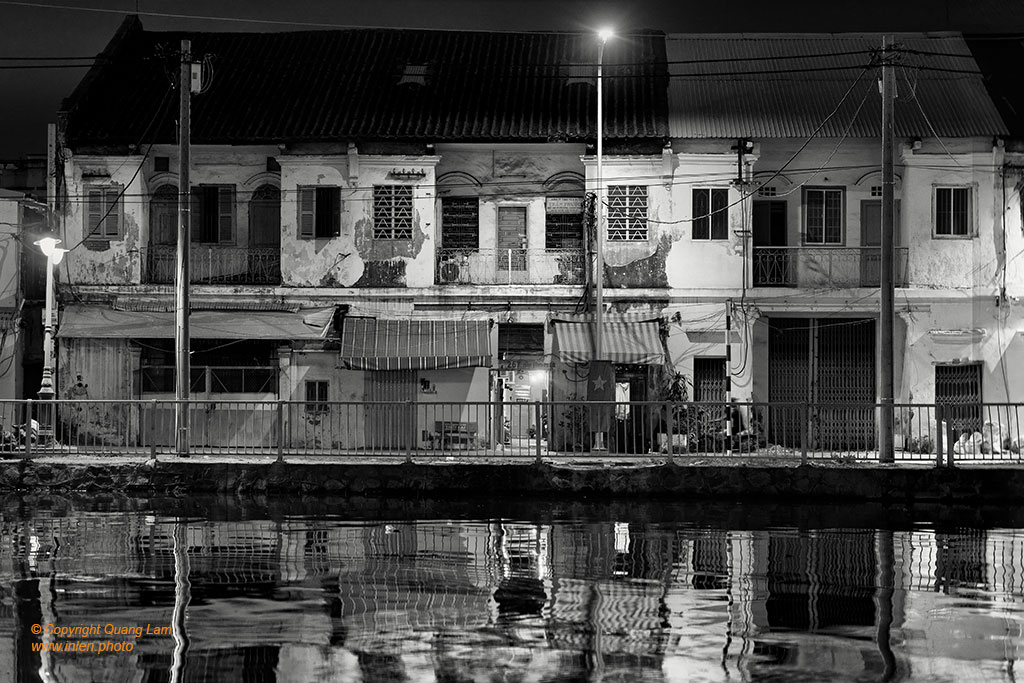
Cette série exceptionnelle provient des archives de la galerie Inlen. Elle se distingue par ses clichés nocturnes, présentant un Saïgon brillamment illuminé, alors considéré comme la « Perle de l’Asie ». En plus des monuments emblématiques comme le Palais du Gouverneur, la Cathédrale et le marché Bến Thành, le photographe a également capturé des lieux animés tels que les cinémas Rex et Thanh Chung, la boulangerie Brodard et l’hôtel Đồng Khánh dans le quartier animé de Chợ Lớn.
Statement by the visual artist Quang Lam
“The Autograph Collection Hotels, in collaboration with Vinpearl Landmark 81, has launched the visionary project “Gallery in the Sky.” I would like to cultivate the values of international connections and exchanges, leveraging the unique setting of Vinpearl Landmark 81. My vision for “Gallery in the Sky” involves capturing captivating photographs of airplanes arriving from all corners of the globe, visible from the hotel. But invisible, they are like “Air Flows”.
[…]
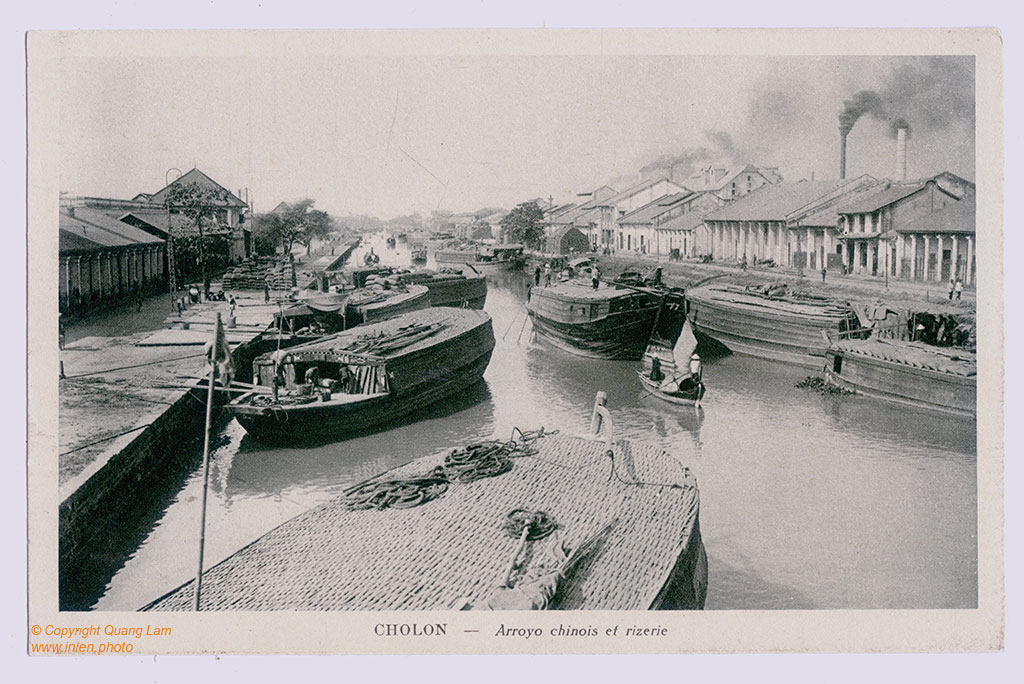
Les conséquences historiques du renversement de la dynastie Ming par la dynastie Qing dans la Chine du XVIIe siècle ont conduit les loyalistes Ming à chercher refuge en Asie du Sud-Est. Au Vietnam, ces immigrants chinois ont joué un rôle de pionnier lors de la « Marche vers le Sud ». Ils s’installèrent à Bien Hoa. À la fin du XVIIIe siècle, pour échapper aux massacres perpétrés par les troupes Tay-son, la communauté s’est regroupée dans l’emplacement actuel de Cholon,
[…]
Fernand Nadal, né en Algérie, est arrivé à Saigon dans les années 1920. Sa première annonce dans la revue Indochine française (1922) décrivait ainsi ses activités : « Photographie d’art – Photographie industrielle» et « Éditions : cartes postales, albums photos et documentaires sur la Cochinchine, le Cambodge et l’Annam ».
Contrairement à d’autres studios qui se concentraient principalement sur les portraits, le travail de Nadal offrait une orientation documentaire de cette époque.
[…]
Le Palais de l’Indépendance, achevé en 1966 par l’architecte Ngo Viet Thu, lauréat du Prix de Rome, n’a jamais été habité par le président Ngo Dinh Diem qui a demandé sa construction mais par le président suivant qui l’a fait assassiner. Il est devenu un musée depuis le 30 avril 1975, date à laquelle les chars ont fracassé ses portes.
Rebaptisé Palais de la Réunification, il est désormais le lieu de rassemblement de toutes les grandes lanternes et commémorations de la ville.
[…]
The Saigon’s historic main street goes from the Cathedral to the river. Its name changed three times following Saigon’s history, known as Rue Catinat, then Tu Do (Freedom) and now Dong Khoi (Total Revolution).
Consulates, prestigious companies, wealthy families business set their offices and apartments on that street where to be seen was the must.
213 Dong Khoi St. Block at the corner of Le Thanh Ton St was built in 1930s by Brossard et Mopin,
[…]
Photography is about questioning of what reality is and what is captured by the camera.
It is nowadays stimulated by the concept of « hyper-reality » defined by J. Beaudrillard.
It is the inability of consciousness to distinguish reality from a simulation of reality.
This is particularly relevant nowadays where people accept created environments as primarily models, when they are actually all fake.
Video mapping can express the dissolution of the reality into a form that have any reference to the initial architecture.
[…]
This scene is part of the work on the series “Escape” talking about migration.
The theme of the psychological maze is explored through patterns of doors (Thy Nguyen Truong Minh Installation), corridors, rooms, and stairs in old buildings of Saigon.
[…]