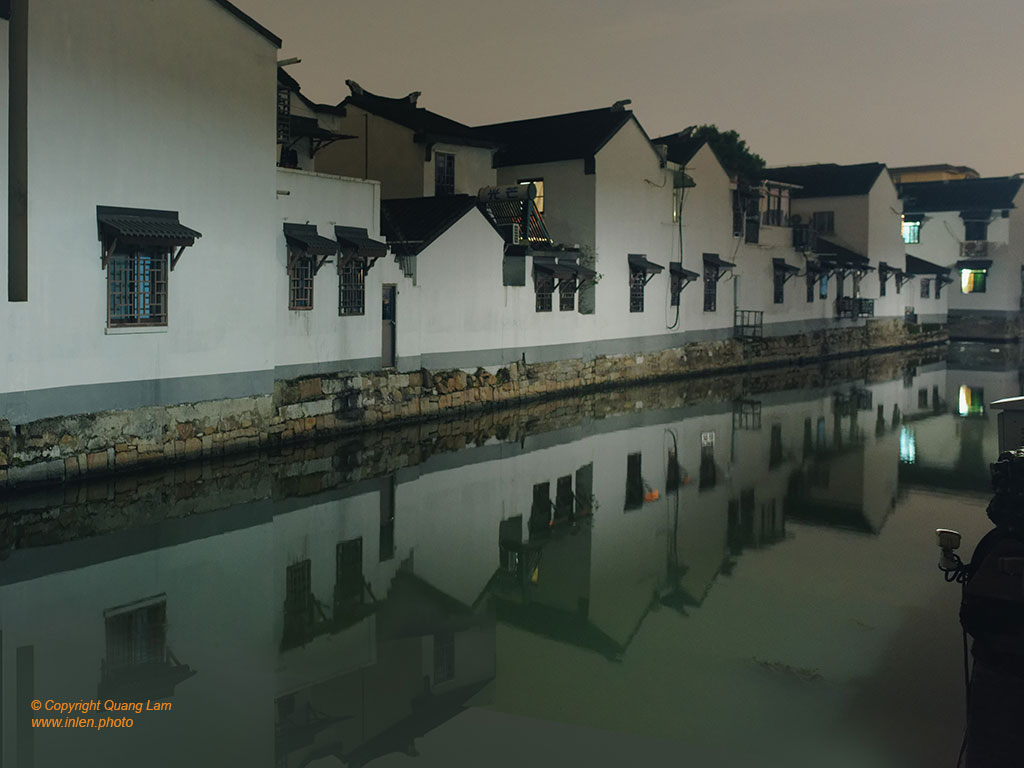
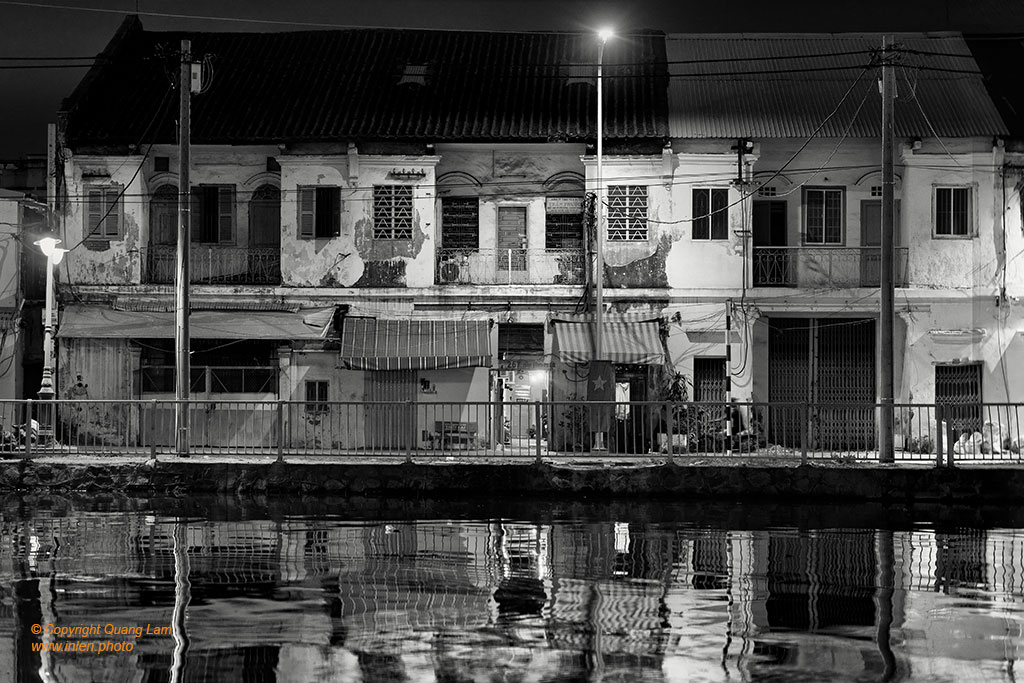
Going through the moon gate at night along the stone-paved banks of Suzhou is the first steps one should experience to enter the landscape of the “Venice of the East”. This elements of Suzhou’s classical garden architecture marks the transition of the different spaces which should be hidden and only revealed while exploring the city with a contemplative mind.
In the age of overtourism and snapshots , the moon door (yuèliàngmén) is still acting its role as a profound intersection of functional design,
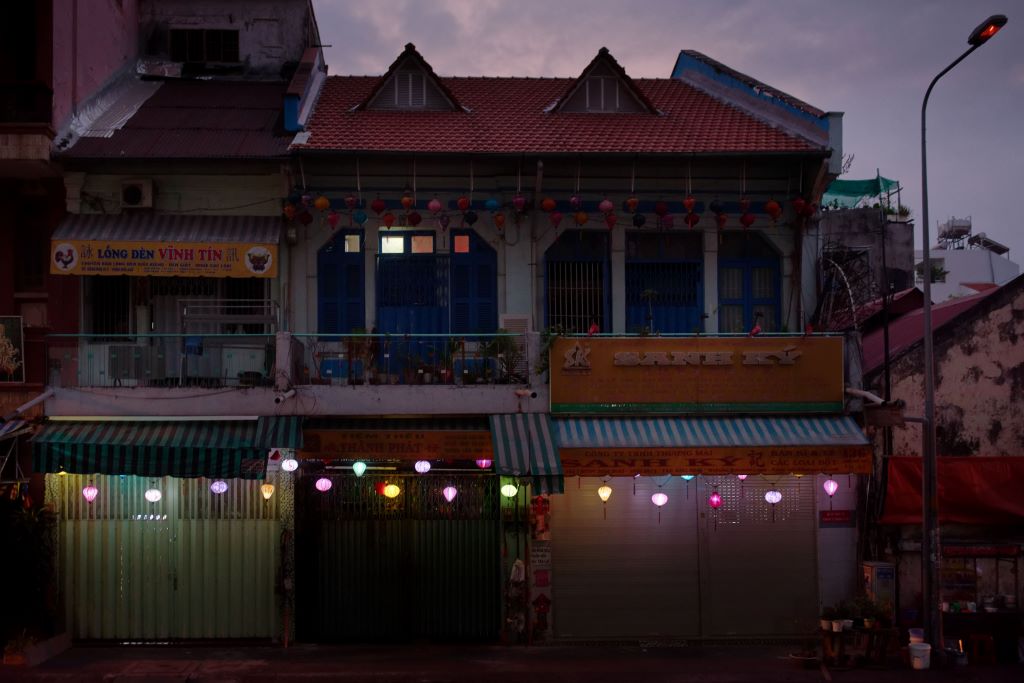
Some cities once experienced a so-called golden age. Their legends originate either from their rich history or from something uniquely special that sets them apart from others. Cholon, founded in the late 18th century, was never part of Saigon—the city now known as Ho Chi Minh City. Its name means “big market,” reflecting its role as a vibrant Chinese trading community and serving as the commercial and cultural hub for Chinese immigrants settling in Saigon.
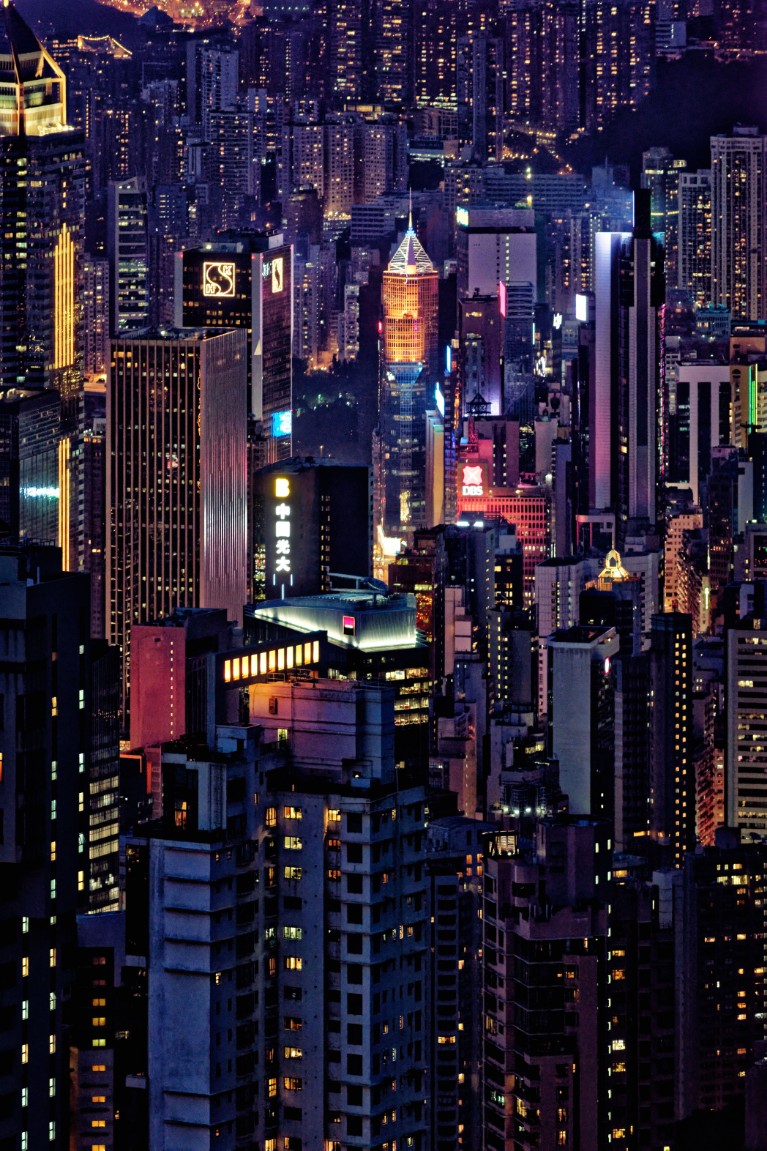
Skyscrapers in Hong Kong are among the most iconic and impressive in the world, reflecting the city’s status as a major global financial hub and urban marvel. Hong Kong boasts one of the highest concentrations of skyscrapers globally, with over 7,000 buildings exceeding 100 meters in height.
To shape its iconic skyline with a more distinctive style, several renowned architects such as I.M. Pei for the Bank of China, N. Foster for the International Commerce Centre (ICC),
The exhibition “Seas of Silk” by research-based artist Quang deLam at Lotus Gallery features a rich and multi-layered scenography. Complementing deLam’s paintings is a curated series of statues from the Óc Eo civilization.
These statues are drawn from photographs taken during a special August 2025 exhibition in Ho Chi Minh City dedicated to Vietnamese National Treasures.
This unique combination of contemporary paintings and and black and white photography provides essential contextual perspective,
The Evolution of the “Far East” Through Travel and Art
The article traces the evolution of the concept of the “Far East” from a romanticized travel destination to a complex, multicultural identity. It begins with a personal reflection on how a vintage photo album of a French tea producer’s journey to Vietnam sparked a feeling of authentic travel, a sensation lost in modern, routine air travel. This sentiment is contrasted with the early travelogue of Goethe’s “Italian Journey,”
La rue Trần Hưng Đạo à Chợ Lớn est un centre commercial très animé, réputé pour ses marchés de rue dynamiques, ses boutiques variées et ses nombreux restaurants. Elle constitue la plus longue route d’accès et l’artère principale de Hô Chi Minh-Ville, traversant de nombreux quartiers sur environ 6 kilomètres. Son histoire est profondément liée à l’évolution de la ville elle-même.
À l’origine, Saïgon et Chợ Lớn existaient comme entités distinctes. En 1865,
“A l’occasion du 50e anniversaire de la fin de la guerre, je décidais de m’aventurer jusqu’à la DMZ distante d’environ 100 km de l’ancienne cité impériale de Hué. Ce n’était pas la première fois que je séjournais dans cette région mais certainement un frein psychologique repoussait ma curiosité de prendre ce chemin qui remontait vers le Nord sans vraiment croiser de lieux touristiques plus culturels ou balnéaires.
Gardens hold a significant place in various mythologies around the world, often symbolizing paradise, creation, and the divine. More then now then ever gardens provide a direct connection to nature, offering a peaceful escape from the hustle and bustle of daily life.
In Japanese mythology and Zen Buddhism, gardens are seen as places of meditation and reflection. They often symbolize the natural world in its most essential and abstract form. Early gardens were influenced by Chinese garden philosophy,
“I’m contemplating the mountains crossed by the stripes in geometric pattern similar to the locals clothing fabrics. These people have found refuge here, among the heights that scare both Hans and Kinh people from the lowlands. To grow rice, they patiently engraved the land into embroideries of laces that are stretched as far my eyes can see. These strata are marks of time like the concentric circles of a tree. After this stop, my guide Nam and I get back on our bike to reach Dong Van before nightfall.
This series intricately depicts selected nodes of the different threads woven throughout the last century of Vietnamese history, employing narrative elements reminiscent of a compelling tale.
According to ancient Vietnamese mythology, the people of Vietnam are believed to be descendants of a dragon and an Immortal. The prominent myth of the origins of the Vietnamese people involves Lạc Long Quân, a dragon lord, and Âu Cơ, a fairy, who had 100 children from 100 eggs.
Photographer Quang Lam delves into the profound context behind his latest series.
“It all began with my exploration of my family’s ancestral tombs in Bac Lieu. According to family records, our ancestral vault is situated in the tranquil village of Hoa Binh, in the sub-prefecture of Vinh Loi, Bac Lieu province. My father was born in this village, which is home to around 2,000 residents and lies just 5 kilometers from the coast.
This series discusses the interplay between documentary and fiction in storytelling, drawing on quotes from Jean Luc Godard, a key figure in the French New Wave :
“All great fiction films tend toward documentary, just as all great documentaries tend toward fiction . . . One who opts for one necessarily finds the other at the end of his journey.” “A story should have a beginning, a middle, and an end… but not necessarily in that order.”
It highlights that effective narratives often combine elements of both genres,
“The bridge was built in 1899–1902 by the architects Daydé & Pillé of Paris, and opened in 1903. Before North Vietnam’s independence in 1954, it was called Paul-Doumer Bridge, named after Paul Doumer – the governor-general of French Indochina and then French president. At 2.4 kilometres in length,it was, at that time, one of the longest bridges in Asia.
Some parts of the original structure remain intact, while large sections have been built later to repair the holes.
Before the bridges were built to span the various arms of the Mekong river, traveling through the Delta meant to wait for the ferries. The most famous one was replaced by the Cần Thơ Bridge, constructed over an arm of the Mekong, the Bassac (or Hau Giang), near the city of Cần Thơ. “It’s the crossing of a ferry on the Mekong. The elegant man has stepped out of the limousine. He smokes an English cigarette.
By Prof. Steve Bisson, Paris College of Art Chief editor Urbanautica Institute
THE WEIGHT OF REMEMBRANCE AND TIME SCLEROSIS
“Strips of land emerging from the sea of amnesia, that\’s memory. Sooner or later, they will sink. So, sailing in time to explore their internal geography may be fruitful.”
“[…]Quang Lam’s work offers an excellent visual viaduct to its understanding by depicting the iconic history of the so-called Independence Palace of Vietnam.
“This show will explore the dynamic interaction between XEM’s artworks, innovative installation concepts, and viewer engagement, creating a lively and evolving environment. Be part of it to experience the energy and creativity that XEM brings to the forefront of contemporary photography, as they continue to redefine the medium’s role in both archival truth and fictional creation.” Text by Vin Gallery
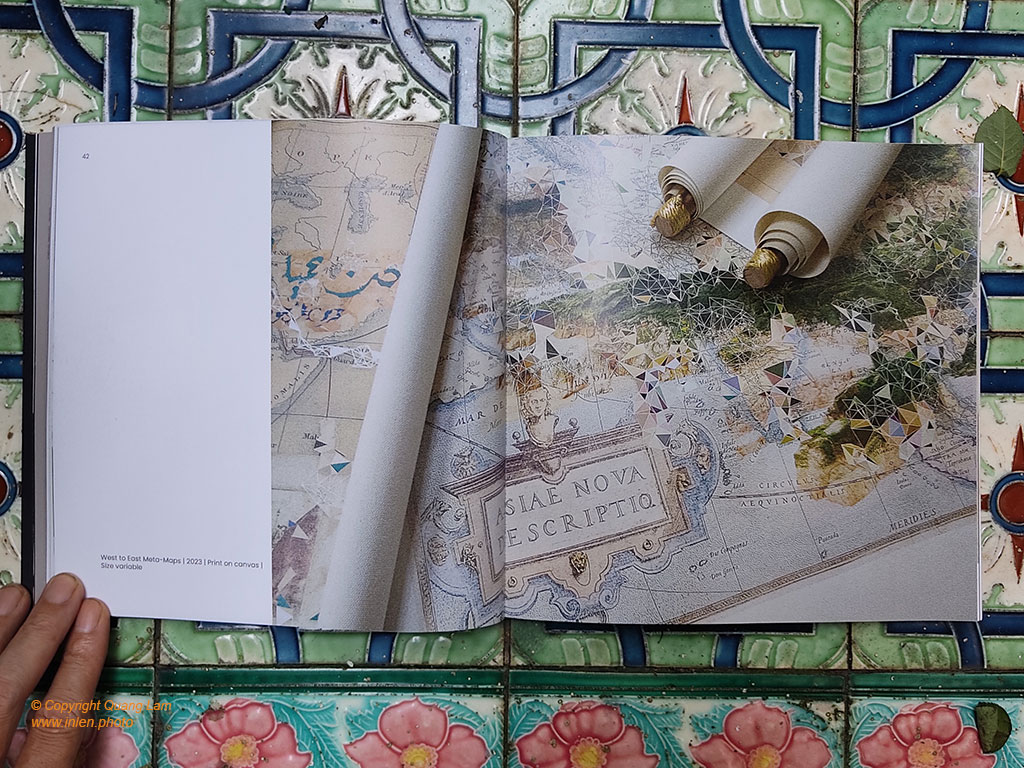
Visual artist Quang Lam explores the relationship between maps and territory. It is encapsulated in the famous expression “the map is not the territory,” coined by Polish-American philosopher Alfred Korzybski.
“The Autograph Collection Hotels, in collaboration with Vinpearl Landmark 81, has launched the visionary project “Gallery in the Sky.” I would like to cultivate the values of international connections and exchanges, leveraging the unique setting of Vinpearl Landmark 81. My vision for “Gallery in the Sky” involves capturing captivating photographs of airplanes arriving from all corners of the globe, visible from the hotel. But invisible, they are like “Air Flows”.
This series captures the raw sequence by the photographer Quang Lam of events from October 5th to 12th, 2014. Organized in the style of black and white contact sheets, this presentation immerses viewers in the days when Hong Kong’s youth sought to take control of their future. Led by the 18-year-old Joshua Wong (visible in contact sheet number #5), the students occupied for two months the heart of Hong Kong in the Admiralty zone, where government buildings are located.
En cartographie, terra incognita fait référence à des régions qui n’ont pas été cartographiées ou documentées. On pense que l’expression est apparue pour la première fois dans la Géographie de Ptolémée vers 150 EC1. Il désigne des territoires inexplorés ou inconnus. Il est intéressant de noter que l’expression a également été utilisée métaphoriquement pour décrire tout sujet ou domaine de recherche inexploré. Cette série capture la genèse in situ d’une Terra Incognita qui s’est déroulée sur plusieurs mois.
L’inspiration pour cette série provient du conte de “Từ Thức Épousant une Déesse”, une histoire qui se déroulant durant la dynastie Trần. Le mandarin rencontre et épouse une déesse dans le royaume divin. Pris de nostalgie, il demande de revenir dans le Monde des mortels pour revisiter sa ville natale. Sans le savoir, d’innombrables années se sont écoulés pendant son absence.
Se déroulant à Hué, au milieu du paisible lagon de Tam Gian à Hué,
On célèbre ce 7 Mai de cette année 2024 le 70e anniversaire de la bataille de Dien Bien Phu.
Cet article remet en évidence les évènements militaires et la conférence Genève qui s’ouvre au même moment. Les derniers jours d’une bataille qui se tient à des milliers de kilomètres est ardemment suivie par les médias français.
La Conférence de Genève de 1954 s’est tenue à Genève, en Suisse, pour discuter de la situation en Indochine et en Corée.
Les conséquences historiques du renversement de la dynastie Ming par la dynastie Qing dans la Chine du XVIIe siècle ont conduit les loyalistes Ming à chercher refuge en Asie du Sud-Est. Au Vietnam, ces immigrants chinois ont joué un rôle de pionnier lors de la « Marche vers le Sud ». Ils s’installèrent à Bien Hoa. À la fin du XVIIIe siècle, pour échapper aux massacres perpétrés par les troupes Tay-son, la communauté s’est regroupée dans l’emplacement actuel de Cholon,
Le Palais de l’Indépendance, achevé en 1966 par l’architecte Ngo Viet Thu, lauréat du Prix de Rome, n’a jamais été habité par le président Ngo Dinh Diem qui a demandé sa construction mais par le président suivant qui l’a fait assassiner. Il est devenu un musée depuis le 30 avril 1975, date à laquelle les chars ont fracassé ses portes.
Rebaptisé Palais de la Réunification, il est désormais le lieu de rassemblement de toutes les grandes lanternes et commémorations de la ville.
Nous avons mentionné, dans notre dernier numéro, la visite que l’empereur d’Annam Bao Daï a effectuée au Tonkin pendant la première quinzaine du mois de décembre. Nous avons reçu depuis quelques nouvelles photographies qui illustrent d’un pittoresque commentaire ce voyage d’études du jeune souverain, dont le retentissement a été considérable dans toutes les villes et les régions qu’il a parcourues.
Rédaction par Dr Bridget Tracy Tan Director, Institute of Southeast Asia Arts – Art Galleries Academic Advisor (Southeast Asian Arts) Nanyang Academy of Fine Arts
“Le style de Quang Lam est sans conteste une question de jeu, mais aussi de responsabilité. Il souhaite que le spectateur sache comment nous vivons ce que nous expérimentons, à travers ce que nous mettons en scène et les pensées qui en surgissent,
Par le Prof. Steve Bisson, Paris College of Art Rédacteur en chef de l’Institut Urbanautica
Les conditions de vie des masses n’ont pas toujours coïncidé avec un Éden terrestre. C’est encore le cas aujourd’hui si l’on observe l’urbanisme et notamment l’état des banlieues ou des densités métropolitaines qui laissent peu de place aux rêves verts. Une terrasse est déjà un privilège. Dans son urbanisation progressive, l’espèce humaine s’est éloignée de la nature,
Le Project – Air Skylen participe à la Biennale The Wrong 6ème édition, au sein du Pavillon ANIMA “Directory”, organisé par Tam Nguyen, avec les conseils de Mai Huyen Chi & Xuan Ha et le soutien de Duyen Le et Lien Nguyen
La plupart des pays d’Extrême-Orient possèdent un littoral. Ces territoires seront touchés par l’élévation du niveau de la mer comme les mégapoles de Bangkok, Ho Chi Minh Ville, comme l’écrit la nouvelle étude du Centre national de la recherche scientifique (CNRS), de l’Université de La Rochelle en France et le Centre national de recherche atmosphérique aux États-Unis (NCAR).
D’ici 2100, près de 50 millions de personnes seront confrontées à cette hausse du niveau de la mer plus élevée que prévu.
L’idée principale du travail de Quang Lam dans cette exposition est d’explorer le concept d’Asie Extrême-Orient dans lequel Saigon et Singapour étaient des nœuds essentiels pour sa représentation.
De Wikipédia sur :
« Le terme a été utilisé pour la première fois dans le discours géopolitique européen au XVe siècle, en particulier britannique, désignant l’Extrême-Orient comme le « plus éloigné » des trois « Est », au-delà du Proche-Orient et du Moyen-Orient.[..] De manière significative ,
Cette série a été exposée au Sa Sa Art Projects à Phnom Penh (Cambodge) avec le collectif XEM
Extrait du texte de présentation du commissaire Lyno Vuth
“Dans l’exposition, les œuvres physiques de chacun des cinq artistes prennent des formes prolongeant leur présentation dans le magazine. Les œuvres présentées ici par XEM traitent non seulement de ce qui nous sépare mais aussi de ce qui nous lie et nous unit. Les mêmes choses peuvent produire de multiples effets complexes.
Ce texte a été rédigé par Blanche Cardoner (Ecole du Louvre) dans son étude: La photographie contemporaine vietnamienne et la mémoire, Sélection d’œuvres d’artistes contemporains vietnamiens ou de la diaspora travaillant leur Histoire
Manifestations et réminiscences de l’Histoire : Quang Lam, R Like (2012 – 2015)
[..] Quang Lam s’intéresse au contraire à un espace hautement représentatif de l’histoire vietnamienne dans R Like… (2012 – 2015).
«La vraie rébellion est celle qui remet en question l’ordre préconstitué, non pas qu’elle le néglige au profit d’une immaturité définitivement anarchique ou hédoniste.»
Dans la récente série « Hong Kong 2047 » de Quang Lam, le photographe alterne des portraits verticaux de gratte-ciel grotesques, représentés presque comme s’il s’agissait de totems, avec des images en gros plan de systèmes de contrôle et de surveillance à distance.
Voler est l’un des rêves les plus profonds des humains. Le mythe d’Icare a toujours inspiré notre imaginaire. Le mouvement artistique futuriste du début du XXe siècle mettait l’accent sur le dynamisme, la vitesse, la technologie et la jeunesse, à travers les machines volantes.
Quang Lam s’intéresse à étudier la modernité (du Vietnam) à travers son développement industriel et technologique à travers cette volonté universelle. Ce point de vue a rarement été utilisé pour comprendre l’histoire de l’art du pays.
At the Art Institute of South-East Asia in Singapore, the Terra Utopia series is currently on display as part of the exhibition XEM – Meta Far-East. This captivating collection explores the evolution of perceptions of the “Far East,” tracing its journey from antiquated geographical views to a more nuanced understanding shaped by the colonial era and the pressing challenges posed by climate change.
The photographs resemble aerial landscapes of uncharted coastal territories, evoking the sense of mystery that surrounded Far East Asia,
Il existe des lieux où l’architecture et l’urbanisme ne sont pas seulement façonnés par les besoins du Présent mais aussi pour les croyances d’une vie dans l’au-delà.
Cette série photographique s’imprègne de cette philosophie qui a façonnée Hué, la ville impériale au centre du Vietnam,
Ce texte est issu du livre Mémoires de Son Excellence Huynh Con dit Đan Tường de Jean-Jacnal écrit en 1924. Cette biographie d’un ancien ministre des Rites à la Cour d’Annam contient des détails historiques sur sa vie et présente une description intéressante de la musique à la Cour.
“Toutes les nuits, nous faisions venir des chanteuses. On
a si peu écrit sur cette catégorie de personnes que sans doute on me permettra de
donner quelques détails sur leur vie,
Theses postcards written in early 20th century are unique archive sent from Ha Noi to different capitals of the world (Paris, Beijing, New York, Bruxelles, Hong Khong) give an historical value to the artworks
These conceptual maps are related to the colonialism epoch of Viet Nam in the early 20th century. Hanoi is drawn in transparency over the foreign city meaning the lost of sovereignty of Hanoi at the expense of the external powers.
For the creative event “Thiet Ke & Cong Nghe” in HaNoi , a whole concept of an airline company, named AIR SKYLEN has been presented
Airlines are the symbols of the technology’s level of a country. It also shares the values also international connections and exchanges.
AIR SKYLEN is derived from the term “Skyline,” which refers to the apparent juncture of earth and sky, often describing the silhouette of city skyscrapers against the sky.
This installation is a part of Air Skylen projectdisplayed at Hanoi Creative Week 2022.
The installation has a game video installed in an immersive environment built with a large city map of Hanoi and surrounded by photos of anonymous skyscrapers photo series.
The purpose of the game is to crash the airplane into growing buildings replacing them by trees. The score is defined by a green city percentage.
From official history to the personal and particular life : we always try to give the historical context of our archives, so here is the timeline’s snapshot for the first decade after the end of French colonisation.
1954 – Viet Minh forces attack an isolated French military outpost in the town of Dien Bien Phu. The attempt to take the outpost lasts two months, during which time the French government agrees to peace talks in Geneva.
The myth to reach the sky is as old as humanity, especially told in the myth of Icarus. It has become technologically possible in 20th century.
Architecture also embraced this myth as the new credo. Nowadays, the term skyline is used to describe this type of urbanism based on the vertical line. Skyscrapers became the symbols of the superpower of capitalism
With the vibrant red and blue colors which are creating a time lag impression,
Speaking about “Extinction” is not only about physical matters but also on what is defining us as social humanity within an economical and legal system. Hong Kong is a unique because of its location as a door for both capitalism and communism world. With its history and its economic power, it was and is in the avant-garde and a laboratory of what will happen in the near future.
2047 is the expiration date of the Basic Law which currently is giving the status of special administrative region (SAR) of China for 50 years.
A series of sit-in street protests, often called the Umbrella Revolution and sometimes used interchangeably with Umbrella Movement, or Occupy Movement, occurred in Hong Kong from 26 September to 15 December 2014.
The protests began after a decision regarding restrictive reforms to the electoral system. Key areas in Admiralty, Causeway Bay and Mong Kok were occupied and remained closed to traffic for 77 days.
This series of photos has been taken in Admiralty district where the headquarters of the government,
The Anti-Extradition Law Amendment Bill Movement, also known as the 2019 Hong Kong protests are a series of demonstrations since 15 March 2019 in response to the introduction by the Hong Kong government of the Fugitive Offenders amendment bill on extradition. Large-scale demonstrations took place gradually to a peak of 2 million people participating. Clashes between protesters and the police became the norms.
At the 12th week of protestation The Hong Kong protest movement reached a peak during the march in the Kwun Tong district in Kowloon.
“Movement and tranquility alternate and become the root of each other, Separating into yin and yang and so establishing the two modes…. The interaction of the two forms of qi transform and generate the myriad things. The myriad things sprout out up again and again and change without end”
-Zhou Dunyin (1017–1073) He was a Chinese philosopher during the Song Dynasty. He conceptualized the cosmology,
Although Tibetan Buddhism integrates the three main vessels of Buddhism, it is distinguished by a set of practices and historical and artistic traditions that give it its special character.
The immensity of its territory, its millennial and contemporary history have shaped its expression and its art which are not only visible in the temples but along the roads and within the magnificent landscapes of the Himalaya.
“All great fiction films tend toward
documentary, just as all great documentaries tend toward fiction . . . One who
opts for one necessarily finds the other at the end of his journey.” “A story
should have a beginning, a middle, and an end… but not necessarily in that
order.”
These quotes are from Jean Luc Godard, most influential director of the French New Wave in the 60s which brought life into film with visual experimentation,